
A business can be highly digitalised and still have little that sets it apart. Teams using the same platforms may have access to many features while finding it difficult to evolve the way of working that makes their service distinctive.
ERP, CRM and payroll platforms provide clear value. They avoid rebuilding available capabilities, make it easier to get started and often offer a sound economic foundation. The question becomes more significant when a process concentrates business expertise or a distinctive service: can the provider’s rules support what makes us different?
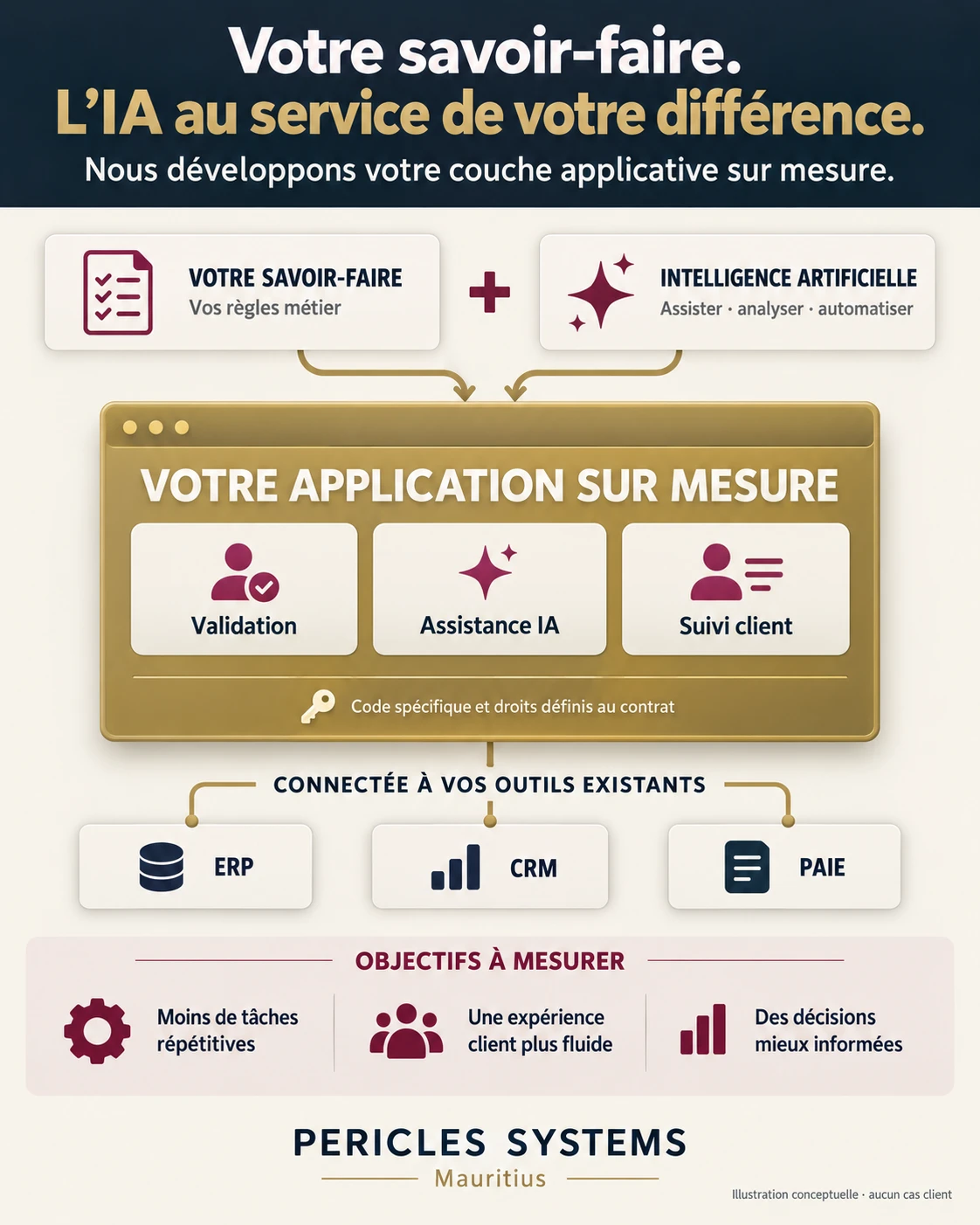
Know-how goes beyond the tool
A company’s know-how lives in its decisions, responsibilities, handling of exceptions and what its teams learn through experience. AI can help use this context, prepare a decision or reduce repetitive work. Its value also depends on the information available, human judgement and the organisation around it.
The objectives should stay practical: reduce repetitive work, make the customer experience more consistent or help people make better-informed decisions. Each expected benefit needs to be tested in the workflow.
Keep the standard; build where it makes sense
Consider a fictional example. A company keeps its ERP for reference data and accounting. A connected application supports the preparation of a service visit, specific approvals and exceptions that shape its service. AI assists the preparation; a person remains responsible for important decisions.
The expected benefit comes from the relationship between the workflow and the service delivered. A specific application is not automatically preferable: it must be maintainable, secure, integrated and worth its total cost.
Plan for control and continuity
Control means being able to understand and evolve a capability: documentation, accessible data, clear responsibilities and continuity of operation. Rights to specific developments, reusable components and third-party licences need to be defined in the engagement. Owning code does not mean owning every technology it uses.
The choice therefore goes beyond buying or building. It is about deciding which capabilities can remain standard and which deserve a particular investment because they create a useful difference.
Which part of your organisation’s know-how should remain in your hands when the tools change?