01
What should we automate?
Remove repetitive work while preserving the judgement, experience and learning your team needs.
Efficiency + human capability
STRATEGY / OPERATIONS / AI
Improve how work moves. Build the capabilities that make your business different. Keep the ability to evolve them.
Mauritius-based · selective regional mandates Lire en français ↗
Three choices that shape the result
A useful transformation improves today's work and leaves your organisation better able to decide, operate and evolve.
Remove repetitive work while preserving the judgement, experience and learning your team needs.
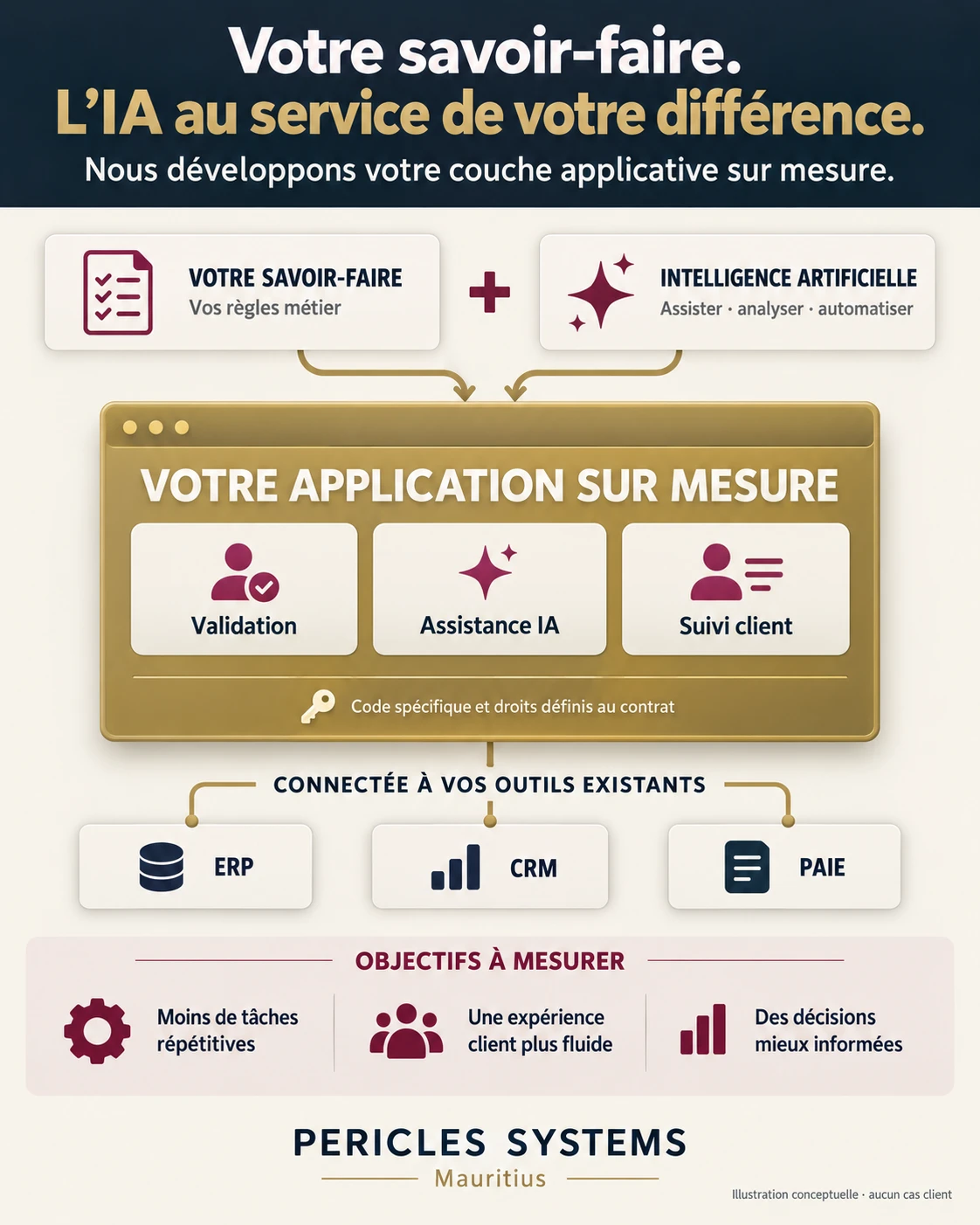
Use proven standard tools where they fit. Build a specific layer where your workflow creates distinctive value.
Make data, decisions, access, documentation and handover explicit, with rights and support defined in the agreed scope.
Build around what works
ERP, CRM and standard platforms remain useful foundations. A specific operating layer can connect them where the workflow carries your expertise and creates distinctive value.
Human judgement stays visible. The scope makes access, documentation, handover and project-specific rights explicit.
See the delivery formatsWhat this looks like in practice
Step through an illustrative supplier-request workflow. See where information is structured, assistance is useful and a person remains responsible.
Stage 01 / 05
A fictional request arrives. Follow how a specific workflow could organise the work around existing business tools.
Simulation only. No AI service, business system or payment is connected.
Explore the five stages at your own pace.
Practical workflow patterns, demonstrated with fictional data. This is an interaction model, not a client deployment or measured result.
Three ways to begin
Decide the first useful move.
Map the workflow, tools and constraints. Agree a proportionate scope and explicit success criteria.
Scoping decision + first-step plan
Discuss your challengeTest a practical capability.
A focused pilot around your existing tools, with human review, acceptance criteria and documented handover.
Pilot + documentation + knowledge transfer
Explore mandate formatsMake it work for your team.
Support adoption, review exceptions and plan maintenance so the system can evolve with the business.
Review cadence + responsibilities + evolution
Understand the approachA human responsibility
A useful system needs to be understood by the people using it, supported by the people making decisions and documented well enough to evolve. Pericles connects strategic intent, design decisions and the realities of delivery.
Useful beyond delivery
Each scope should make it clear how the organisation will understand, operate and evolve what is delivered.
Clear workflow logic, documentation and responsibilities.
Agreed access, human review and acceptance criteria.
Knowledge transfer, a maintenance path and explicit rights.
Project-specific rights, reusable components and third-party licences are distinguished in the agreed contract. Maintenance and security remain ongoing responsibilities.
Strategy · Operations · AI
Access to the same tools does not create the same capabilities. The strategic choice is deciding what can remain standard and what your business needs to be able to evolve.
Read the perspectiveYour next useful move
A workflow that gets stuck. An AI idea that needs a scope. A capability your team needs to control.